
Search Engine Optimization and Marketing: The Complete Growth Guide
Book a Free Consultation Now
Would you like to know more about this topic?
Contact us on WhatsApp and get a free consultation from our experts
Contact on WhatsApp NowRelated reading: If you are researching a digital marketing agency for small business, this English guide covers process, evaluation, and what to expect from a specialist partner.
Related reading: If you are researching a application like uber, this English guide covers process, evaluation, and what to expect from a specialist partner.
Related reading: If you are researching a custom software development company, this English guide covers process, evaluation, and what to expect from a specialist partner.
Related reading: If you are researching a mobile app development company, this English guide covers process, evaluation, and what to expect from a specialist partner.
SEO Marketing Strategy
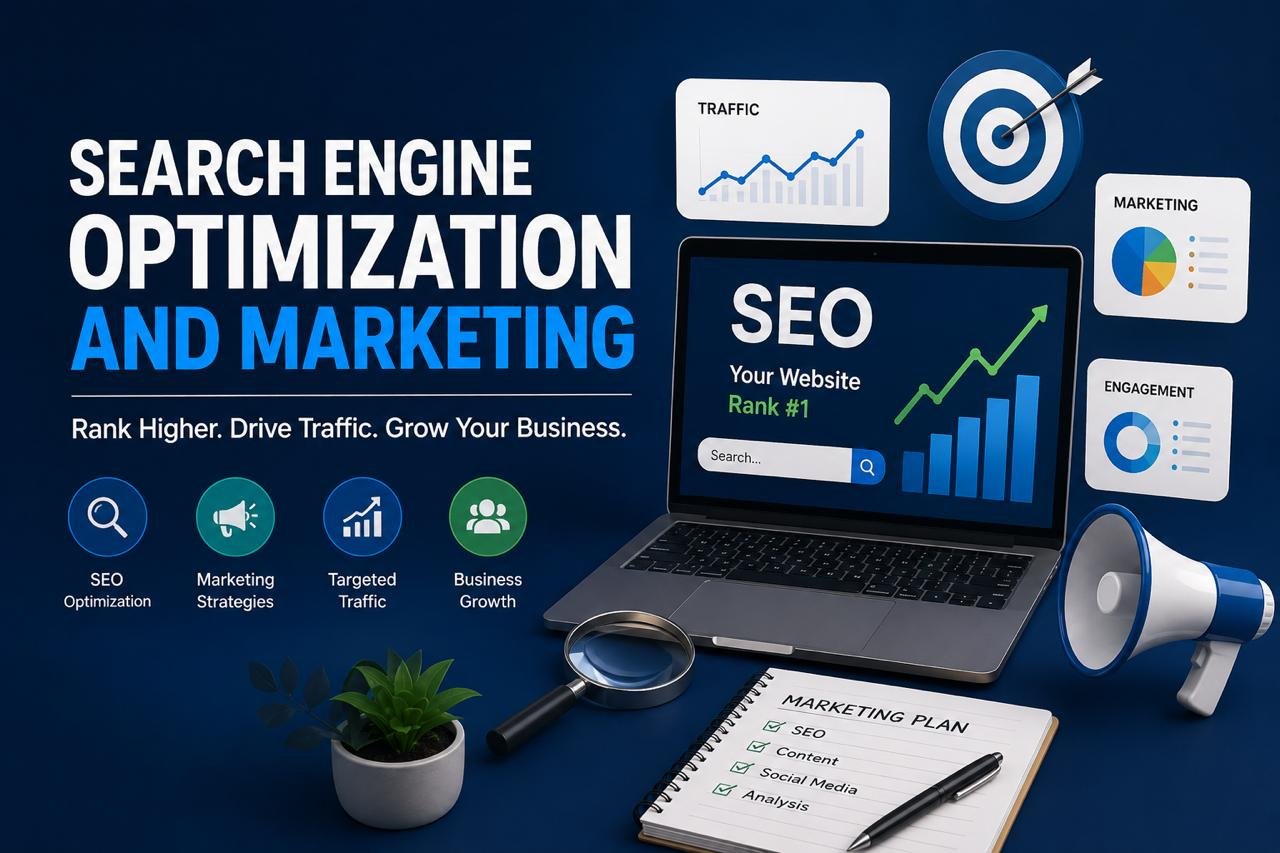
Search engine optimization and marketing work best when they are not separated. SEO brings your business in front of people with intent. Marketing turns that attention into trust, leads, sales, and long-term growth.
Many businesses treat search engine optimization as a technical checklist and marketing as a separate activity handled through ads, social media, or branding. That separation is one of the biggest reasons online growth becomes slow, expensive, and inconsistent.
Search engine optimization and marketing should work as one connected growth system. SEO helps your website appear when people are actively searching. Marketing shapes the message, builds confidence, and gives visitors a reason to choose your business instead of a competitor.
At Nofal SEO, we look at search differently. Rankings matter, but they are not the final goal. The real goal is to attract qualified visitors, answer their questions better than competing pages, create trust, and convert that attention into measurable business outcomes.
What Is Search Engine Optimization and Marketing?
Search engine optimization and marketing is the strategic combination of SEO, content marketing, technical performance, brand positioning, user experience, analytics, and conversion optimization to help a business grow through search.
SEO focuses on making your website easier for search engines to crawl, understand, index, and rank. Marketing focuses on making your offer clear, relevant, persuasive, and trustworthy to the people who visit your website.
When these two disciplines are combined, they answer the three questions every growth-focused website must solve:
- Can the right people find you?
- Do they trust what they find?
- Are they motivated to take action?
A business can rank and still fail if its message is weak. A business can have great branding and still fail if nobody finds it. The winning strategy connects both sides.
Why SEO Alone Is Not Enough
Ranking on Google is valuable, but rankings alone do not guarantee leads, sales, or revenue. A page can reach the first page and still underperform if the visitor does not understand the offer, trust the brand, or know what to do next.
SEO alone is not enough when:
- The content does not match search intent
- The page gives generic answers instead of useful insight
- The website loads slowly or feels difficult to use
- The brand message sounds like every competitor
- The call to action is weak, hidden, or confusing
- The page attracts traffic but not qualified buyers
- There is no tracking for calls, forms, purchases, or revenue
Marketing closes the gap between traffic and results. It gives your SEO strategy a business purpose.
SEO vs SEM vs Digital Marketing
Business owners often mix the terms SEO, SEM, and digital marketing. Understanding the difference helps you choose the right strategy.
SEO
SEO is the process of improving organic visibility in search engines. It includes keyword research, on-page SEO, technical SEO, content optimization, internal linking, backlinks, local SEO, and user experience improvements.
SEM
SEM usually refers to paid search marketing, such as Google Ads. It can generate visibility quickly, but it depends on budget. When the campaign stops, paid traffic usually stops too.
Digital marketing
Digital marketing is the broader umbrella. It can include SEO, paid ads, social media, email marketing, content marketing, conversion optimization, analytics, automation, branding, and customer retention.
SEO should not be isolated from digital marketing. It should be one of the strongest foundations inside a complete marketing system.
The Complete SEO Marketing Growth System
A strong search engine optimization and marketing strategy is not built from random blog posts. It follows a complete system that connects search demand with business goals.
1. Business and market analysis
Before choosing keywords, you need to understand the business model, audience, services, pricing, competition, margins, sales cycle, and locations. SEO decisions should support commercial value, not just traffic volume.
2. Keyword research with intent
Keyword research should separate informational, commercial, transactional, local, and comparison searches. Someone searching “what is SEO” needs education. Someone searching “SEO marketing agency” may be evaluating providers. Someone searching “SEO services pricing” is closer to a buying decision.
3. Search intent mapping
Each keyword should be matched with the right page type. Some keywords need blog guides. Others need service pages, local landing pages, comparison pages, category pages, or FAQs.
4. Content architecture
Your website should be structured around topics, services, and customer journeys. Internal links should guide both users and search engines from broad educational content to high-value service pages.
5. Technical performance
Search engines and users both prefer websites that load quickly, work well on mobile, use clean URLs, avoid broken links, and provide a smooth experience.
6. Authority building
To compete in serious markets, your website needs trust signals. These can include backlinks, mentions, reviews, case studies, author expertise, client results, and consistent brand presence.
7. Conversion optimization
Every important page should make the next step obvious. Calls to action, forms, phone numbers, offers, trust elements, and page layout all affect whether traffic becomes business.
8. Measurement and improvement
SEO marketing should be measured through rankings, traffic, engagement, leads, calls, forms, sales, and revenue impact. What gets measured can be improved.
Content That Ranks and Sells
Content is where SEO and marketing meet. Weak content repeats what competitors say. Strong content understands the searcher, solves the problem, builds confidence, and moves the visitor closer to action.
High-performing SEO marketing content should:
- Answer the query clearly and quickly
- Cover the topic more completely than competing pages
- Use practical examples and real business context
- Explain the next steps, not just definitions
- Build authority through experience and clarity
- Include internal links to relevant service pages
- Use strong headings, FAQs, and readable formatting
- End with a clear call to action
Content by buyer journey stage
Awareness content answers broad questions and introduces the problem. Consideration content compares options and explains strategies. Decision content helps users choose a provider, service, plan, or consultation.
The best SEO marketing strategies do not depend on one article. They build a content ecosystem that supports the full customer journey.
Technical SEO and User Experience
Technical SEO makes sure your website can be crawled, indexed, understood, and used easily. It is the foundation that protects your content investment.
Important technical SEO factors include:
- Fast loading speed
- Mobile-friendly design
- HTTPS security
- Clean URL structure
- Correct heading hierarchy
- XML sitemap health
- Robots.txt configuration
- Canonical tags
- Schema markup where appropriate
- No harmful duplicate content
- No broken internal links
- Core Web Vitals improvement
User experience is also a marketing issue. If a website is slow, confusing, or hard to navigate, visitors leave before they understand your value. Technical SEO helps rankings, but it also helps conversion.
Authority, Backlinks, and Trust
Search engines need signals that your website is worth trusting. Users need the same thing. Authority building supports both ranking and conversion.
Authority can come from:
- High-quality backlinks from relevant websites
- Digital PR and media mentions
- Industry directories and professional profiles
- Useful resources that others naturally reference
- Client reviews and testimonials
- Case studies and portfolio examples
- Expert authorship and brand transparency
Backlink quality matters more than quantity. A small number of relevant, trustworthy links is more valuable than many spammy links that create risk.
Local SEO Marketing for Service Businesses
For businesses that serve specific cities, regions, or service areas, local SEO can become one of the highest-value marketing channels.
Local SEO marketing helps your business appear in:
- Google Maps
- Local organic results
- “Near me” searches
- City-based service searches
- Service area pages
A strong local SEO strategy includes Google Business Profile optimization, local citations, review management, location pages, local backlinks, service area content, and locally relevant calls to action.
Local SEO is especially valuable for lawyers, doctors, clinics, contractors, agencies, restaurants, real estate businesses, consultants, repair services, and any company that depends on nearby customers.
Conversion Optimization: Turning Search Traffic into Revenue
Traffic without conversion is wasted opportunity. Conversion optimization improves the percentage of visitors who take action.
Strong conversion elements include:
- A clear headline that explains the value
- A strong value proposition
- Visible contact options
- Simple forms
- Click-to-call buttons on mobile
- Trust badges, reviews, and proof
- Clear pricing or consultation expectations when appropriate
- Fast loading pages
- Relevant visuals
- Strong calls to action
Examples of effective calls to action include Get a Free SEO Audit, Book a Strategy Call, Request a Growth Plan, and Contact Nofal SEO Today.
The goal is not to pressure users. The goal is to make the next step clear, useful, and easy.
Search Engine Optimization and Marketing in the AI Search Era
Search behavior is changing. People now use traditional search engines, AI assistants, voice search, answer engines, and AI-generated search summaries. This does not make SEO less important. It makes strong SEO marketing more important.
Modern content must be:
- Clear and structured
- Helpful and specific
- Written with real expertise
- Easy for search systems to understand
- Connected to trusted brand signals
- Supported by topical authority
- Focused on real user questions
Businesses that want long-term visibility should build content that is useful to humans and easy for search systems to interpret. That means better structure, clearer answers, stronger brand authority, and consistent expertise across the website.
How to Build a Winning Search Engine Optimization and Marketing Strategy
- Audit the website: Review technical SEO, indexing, speed, content, UX, analytics, and conversions.
- Study the market: Analyze competitors, search demand, content gaps, and customer behavior.
- Map keywords to intent: Separate awareness, consideration, decision, local, and transactional keywords.
- Improve core pages: Strengthen service pages, landing pages, category pages, and money pages first.
- Create better content: Publish guides, FAQs, comparisons, and resources that are genuinely more useful than competitors.
- Build authority: Earn relevant links, reviews, mentions, and trust signals.
- Optimize conversion: Improve headlines, CTAs, forms, mobile experience, and proof elements.
- Track business results: Measure calls, leads, sales, revenue, and cost efficiency, not only rankings.
Common Mistakes Businesses Make
Many companies invest in SEO and marketing but fail to get strong results because they make avoidable mistakes.
- Choosing keywords only by search volume
- Publishing generic AI-style content with no real value
- Ignoring technical SEO
- Copying competitors instead of outperforming them
- Focusing on traffic instead of qualified leads
- Using weak or unclear calls to action
- Ignoring mobile users
- Not tracking conversions
- Building low-quality backlinks
- Forgetting local SEO opportunities
- Never updating old content
- Separating SEO work from marketing strategy
SEO marketing should be intentional. Every page should have a purpose. Every keyword should support a business goal. Every important visitor should know what to do next.
Why Choose Nofal SEO?
Nofal SEO helps businesses connect search visibility with real growth. We do not treat SEO as isolated technical work or random content publishing. We build strategies designed around your market, your audience, your services, your competitors, and your revenue goals.
Our search engine optimization and marketing approach includes:
- SEO audits and growth diagnostics
- Keyword research and search intent mapping
- Competitor analysis
- Content strategy and SEO writing
- Technical SEO improvements
- Local SEO and Google Business Profile optimization
- Authority and backlink strategy
- Conversion optimization
- Analytics and performance reporting
- Long-term organic growth planning
Our mission is simple: make your business easier to find, easier to trust, and easier to choose.
Frequently Asked Questions About Search Engine Optimization and Marketing
What is search engine optimization and marketing?
Search engine optimization and marketing is the combination of SEO, content, technical performance, brand messaging, user experience, and conversion optimization to help a business grow through search.
Is SEO the same as marketing?
No. SEO is a part of marketing. SEO focuses on organic search visibility, while marketing also includes messaging, positioning, persuasion, conversion, retention, and business growth strategy.
What is the difference between SEO and SEM?
SEO focuses on organic search results. SEM usually refers to paid search campaigns such as Google Ads. Both can support visibility, but they work differently.
How long does SEO marketing take?
Some technical and on-page improvements can help quickly, but strong organic growth usually takes several months. The timeline depends on competition, website quality, content, authority, and consistency.
Can SEO marketing reduce advertising costs?
Yes. A strong organic strategy can reduce dependency on paid ads over time by creating long-term visibility and qualified traffic that does not require paying for every click.
Why work with Nofal SEO?
Nofal SEO connects rankings with real business outcomes. The focus is not only traffic, but qualified leads, trust, conversion, and sustainable growth.
Ready to Turn Search Visibility into Growth?
Search engine optimization and marketing are strongest when they work together. SEO creates visibility. Marketing builds trust. Conversion turns attention into revenue.
If your business wants more qualified traffic, better leads, stronger authority, and a clearer path to growth, Nofal SEO can help.
Do you need a consultation about this topic?
Contact on WhatsApp